In the world of competitive gaming, every millisecond and every gram counts. That’s why the Lightweight Gaming Mouse has surged from a niche product to an essential piece of gear for serious players. If you’ve ever felt your aim was just a little sluggish or your wrist felt fatigued after a long session, the answer might not be more practice, but less weight in your hand. This guide breaks down everything you need to know about these nimble navigators, helping you understand if making the switch is the right move for your gameplay.
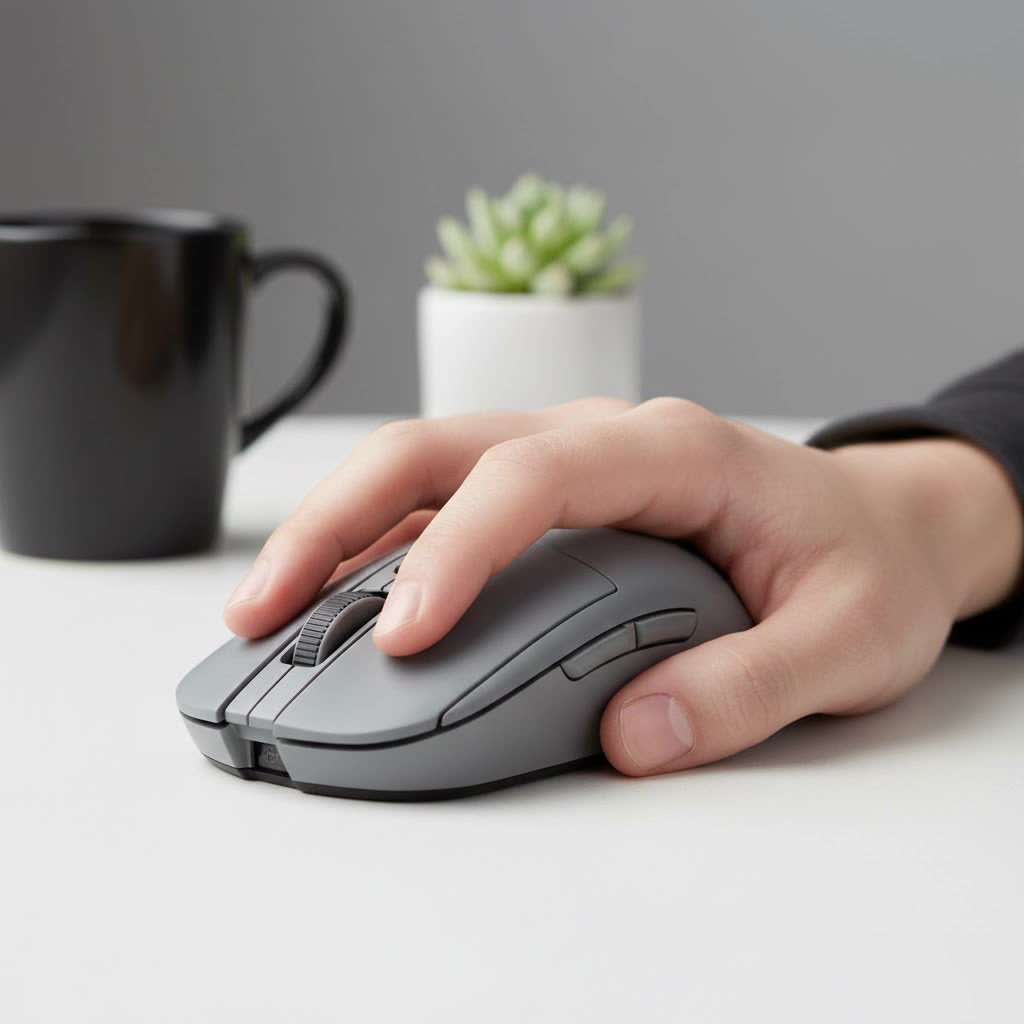
At Cyexx, we’ve tested hundreds of mice, and the trend is undeniable: lighter is often better. But what exactly qualifies as “lightweight,” and what are the real-world benefits? Let’s dive in.
What Defines a Lightweight Gaming Mouse?
There isn’t a strict industry standard, but generally, a lightweight gaming mouse weighs under 80 grams. Many of the most popular models, often called “ultralight,” push this even further, coming in at 60 grams or even less. To put that in perspective, a traditional office mouse can easily weigh over 100-120 grams.
Manufacturers achieve this feather-light status through several clever engineering tricks:
- Perforated Shells: The most recognizable design is the honeycomb or hole-filled chassis. This removes a significant amount of material without compromising the structural integrity needed for intense clicking and swiping.
- Thinner Materials: Using advanced, thinner plastics for the shell reduces weight while maintaining durability.
- Smaller Components: Internal components, from the circuit board to the scroll wheel, are optimized to be as small and light as possible.
- Simplified Design: Some models ditch extra features like RGB lighting or numerous side buttons to shave off every possible gram.
Why Speed and Agility Matter in Gaming
Switching to a lightweight gaming mouse isn’t just about comfort; it’s about performance. The reduction in mass translates directly to tangible in-game advantages.
Faster Reaction Time and Aiming
|
Our Picks for the Best Gaming Mouse in 2026
As an Amazon Associate I earn from qualifying purchases.
|
||
| Num | Product | Action |
|---|---|---|
| 1 | Razer DeathAdder Essential Gaming Mouse: 6400 DPI Optical Sensor - 5 Programmable Buttons - Mechanical Switches - Rubber Side Grips - Classic Black |

|
| 2 | Razer Viper V3 HyperSpeed Wireless Esports Gaming Mouse: 82g Lightweight - Up to 280 Hr Battery - 30K DPI Optical Sensor - Gen-2 Mechanical Switches - 8 Programmable Controls - Classic Black |
|
| 3 | Logitech G502 Lightspeed Wireless Gaming Mouse with Hero 25K Sensor, PowerPlay Compatible, Tunable Weights and Lightsync RGB - Black |
|
| 4 | Logitech G PRO X SUPERLIGHT Wireless Gaming Mouse, Ultra-Lightweight, HERO 25K Sensor, 25,600 DPI, 5 Programmable Buttons, Long Battery Life, Compatible with PC / Mac - Black |
|
| 5 | Logitech G703 Lightspeed Wireless Gaming Mouse W/Hero 25K Sensor, PowerPlay Compatible, Lightsync RGB, Lightweight 95G+10G Optional, 100-25, 600 DPI, Rubber Side Grips - Black |
|
| 6 | Logitech G502 X Plus Wireless Gaming Mouse - LIGHTSPEED Optical, LIGHTFORCE Switches, LIGHTSYNC RGB, HERO 25K Sensor for PC/Mac - Black |
|
| 7 | Razer Basilisk V3 X HyperSpeed Customizable Wireless Gaming Mouse: Mechanical Switches Gen-2-5G Advanced 18K Optical Sensor - Chroma RGB 9 Programmable Controls 535 Hr Battery Classic Black |
|
| 8 | Razer Viper V3 Pro Wireless Esports Gaming Mouse: Symmetrical - 54g Lightweight - 8K Polling - 35K DPI Optical Sensor - Gen3 Optical Switches - 8 Programmable Buttons - 95 Hr Battery - Black |
|
| 9 | Razer Basilisk V3 Customizable Ergonomic Gaming Mouse: Fastest Gaming Mouse Switch - Chroma RGB Lighting - 26K DPI Optical Sensor - 11 Programmable Buttons - HyperScroll Tilt Wheel - Classic Black |
|
| 10 | Razer Naga V2 HyperSpeed Wireless MMO Gaming Mouse: 19 Programmable Buttons - HyperScroll Technology - Focus Pro 30K Optical Sensor - Mechanical Mouse Switches Gen-2 - Up to 400 Hr Battery Life |
|
The core principle is simple physics: less mass requires less force to move and stop. This means you can flick your crosshair to a target faster and with greater precision. For FPS games like Valorant or Counter-Strike, where a split-second headshot decides the round, this speed is a game-changer. Your micro-adjustments become quicker and more intuitive because you’re fighting less against the mouse’s inertia.
Reduced Fatigue and Strain
A heavier mouse forces your wrist and arm to work harder over thousands of movements per gaming session. This leads to fatigue, which can degrade your performance over time and even contribute to repetitive strain injuries (RSI). A lightweight mouse glides more easily, reducing the physical toll and allowing you to play comfortably at your peak for longer periods.
As our in-house ergonomics specialist, Dr. Alistair Finch, notes, “The reduction in hand-arm vibration and muscle exertion from using a sub-70-gram mouse can be significant. It allows for more natural, fluid motions, which is not only better for performance but also for long-term joint health.”
Improved Tracking and Control
Smoothly tracking a moving opponent is crucial in many games. A lighter mouse makes this feel more connected and one-to-one with your hand’s movement. You have more control over the glide, allowing for smoother arcs and more consistent tracking without overshooting your target.
Key Features to Consider Before Buying
Not all lightweight mice are created equal. Beyond the weight, several other factors determine if a mouse is right for you.
Sensor and DPI
The sensor is the heart of the mouse. Look for a top-tier optical sensor that offers a high DPI (Dots Per Inch) range and, more importantly, flawless 1:1 tracking with no acceleration or prediction. While you won’t use the max DPI of 25,000+, a high-end sensor ensures accuracy at the DPI you do use (typically 400-3200).
Grip Style and Ergonomics
How you hold your mouse is critical. A mouse’s shape should complement your grip style for maximum comfort and control.
- Palm Grip: Your entire hand rests on the mouse. You’ll want a larger mouse with a supportive hump.
- Claw Grip: Your palm rests on the back, but your fingers are arched up. You’ll need a mouse with a prominent back hump and responsive buttons.
- Fingertip Grip: Only your fingertips touch the mouse. Smaller, ambidextrous, and very light mice are ideal for this style.
Wired vs. Wireless
A few years ago, wireless was a compromise. Today, modern wireless technology like Razer’s HyperSpeed or Logitech’s Lightspeed offers latency that is indistinguishable from wired connections. A lightweight wireless gaming mouse gives you complete freedom of movement without any cable drag. However, they are typically slightly heavier and more expensive than their wired counterparts.
Build Quality
Don’t let the perforations fool you. A well-designed lightweight mouse should feel solid, with no creaking or flexing when you grip it firmly. High-quality switches (often rated for 50-80 million clicks) are also essential for a crisp, reliable click.
Are There Any Downsides?
While the benefits are compelling, a lightweight gaming mouse might not be for everyone.
- Control Issues: Some players who are used to heavy mice find that they lose a sense of stability and may “overshoot” targets until they adjust.
- Durability Concerns: The open-shell designs are more susceptible to dust and spills, so they require a bit more care.
- Fewer Features: To save weight, many ultralight models sacrifice features like extra programmable buttons, adjustable weights, or extensive RGB lighting.
Frequently Asked Questions (FAQ)
What is the ideal weight for a gaming mouse?
There is no single “ideal” weight, as it’s a matter of personal preference. However, the competitive esports scene has largely shifted to mice under 75 grams, with many pros favoring models in the 50-65 gram range for their blend of speed and control.
Are honeycomb mice difficult to clean?
They are more exposed than solid-shell mice. A can of compressed air is the best tool for blowing out any dust or debris that accumulates inside the shell. Avoid using liquids.
Does a lightweight gaming mouse make you a better gamer?
It won’t magically improve your skills, but it can remove a physical barrier to your performance. By enabling faster reactions and reducing fatigue, it allows your existing skills to shine through more effectively. It’s a tool that enhances your potential.
Is a lightweight mouse good for non-gaming tasks?
Absolutely. The reduced strain and effortless movement are also beneficial for productivity and general computer use, especially if you spend many hours at your desk.
Do I need special mouse feet for a lightweight mouse?
Most high-quality lightweight mice already come with 100% PTFE (Polytetrafluoroethylene) feet, which provide a super-smooth glide. These are essential for maximizing the benefits of the low weight.
The Final Verdict
The lightweight gaming mouse represents a significant evolution in peripheral design, focusing purely on performance and the user’s physical interaction with the game. By reducing inertia and fatigue, these mice offer a clear competitive advantage, particularly in fast-paced titles. If you’re serious about your gaming and looking for an upgrade that you can truly feel, exploring the world of ultralight mice is a step in the right direction. Consider your grip style, feature needs, and whether you prefer the freedom of wireless or the reliability of a wired connection, and you’ll be well on your way to faster, more precise aiming.
