For gamers with larger hands, finding the right peripheral is crucial for comfort and performance. A large gaming mouse, specifically designed to accommodate bigger hands, prevents cramping, awkward grips, and discomfort that standard-sized mice often cause. This guide details key factors like grip style, weight, and sensor quality to help you choose a mouse that feels like a natural extension of your hand, enhancing control and precision during long gaming sessions.
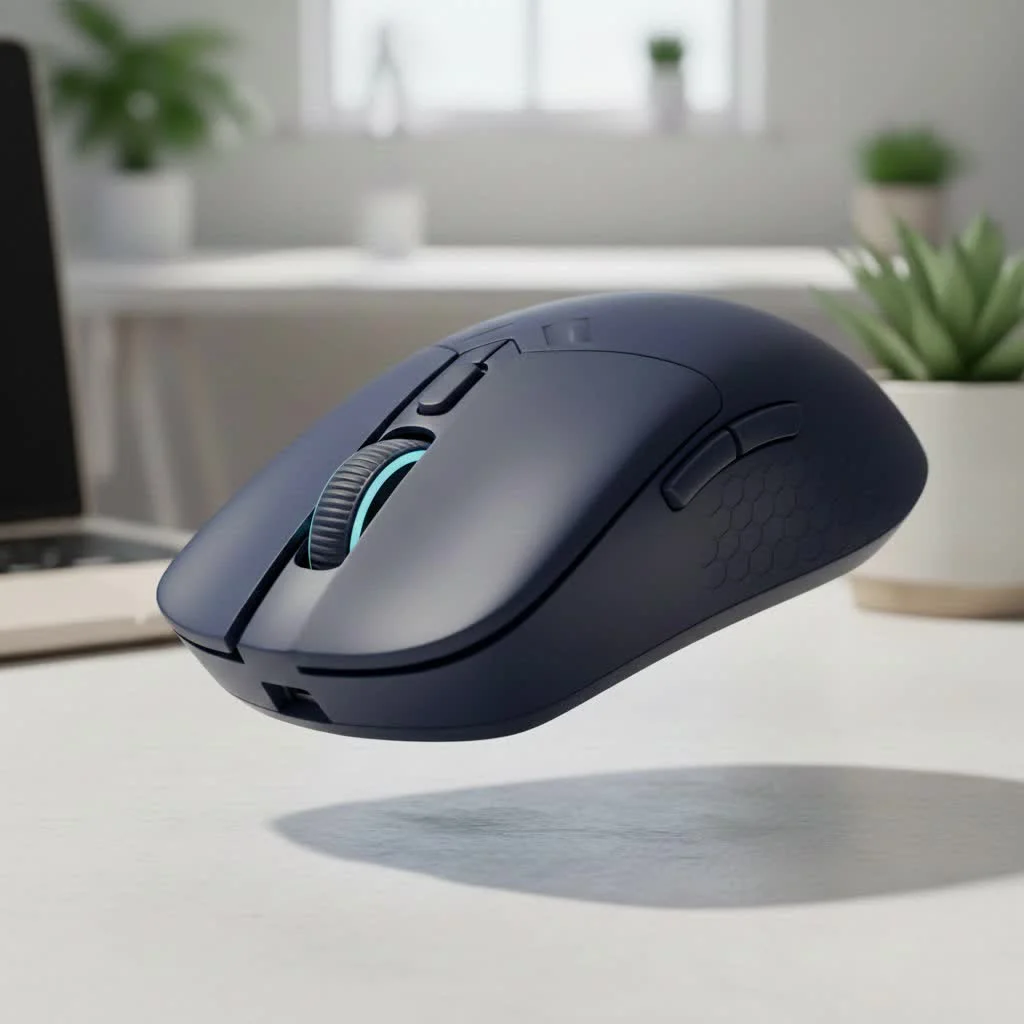
For years, the market primarily offered ultralight, compact mice, often overlooking gamers with larger hands. However, manufacturers now recognize the need for diverse sizing, leading to a new wave of ergonomic, spacious, and feature-packed mice. This article will cover everything you need to know to make an informed choice. For complete reviews library on this site.
Why a Standard Mouse Just Won’t Cut It
Using a mouse that is too small is a significant handicap to both comfort and in-game performance. When your hand cannot rest naturally, it forces an uncomfortable claw or fingertip grip, straining muscles and tendons over long sessions. This can lead to fatigue, reduced accuracy, and even long-term issues like repetitive strain injury (RSI).
A properly sized large gaming mouse provides essential support for your palm and allows your fingers to rest comfortably on the buttons. This ergonomic advantage directly translates to better control, more precise movements, and the stamina needed to stay competitive through marathon gaming sessions. It is not merely a luxury; it is about having the correct equipment for the job.
What Are the Key Factors in a Large Gaming Mouse?
Navigating the world of gaming peripherals can be daunting due to technical jargon and marketing buzzwords. When specifically looking for a larger mouse, focus on these critical features.
Grip Style: Are You a Palm, Claw, or Fingertip Gamer?
Your natural grip is the most crucial factor in determining the right mouse shape. For large-handed gamers, the palm grip is often the most comfortable and common style.
- Palm Grip: Your entire hand, from the base of your palm to your fingertips, rests on the mouse. This requires a longer, wider mouse with a high-profile back to fill your palm and provide maximum support.
- Claw Grip: Your wrist rests on the mousepad, your palm may or may not touch the back of the mouse, and your fingers are arched in a claw-like shape to click the buttons. This grip benefits from a long mouse with a prominent hump for stability.
- Fingertip Grip: Only your fingertips touch the mouse, with your palm completely elevated. While less common for those with very large hands, some lighter, large-form-factor mice can still accommodate this agile style.
Weight and Balance: Heavy Tank or Lightweight Fighter?
|
Our Picks for the Best Gaming Mouse in 2026
As an Amazon Associate I earn from qualifying purchases.
|
||
| Num | Product | Action |
|---|---|---|
| 1 | Logitech G502 Lightspeed Wireless Gaming Mouse with Hero 25K Sensor, PowerPlay Compatible, Tunable Weights and Lightsync RGB - Black |

|
| 2 | Logitech G PRO X SUPERLIGHT Wireless Gaming Mouse, Ultra-Lightweight, HERO 25K Sensor, 25,600 DPI, 5 Programmable Buttons, Long Battery Life, Compatible with PC / Mac - Black |
|
| 3 | Razer Viper V3 HyperSpeed Wireless Esports Gaming Mouse: 82g Lightweight - Up to 280 Hr Battery - 30K DPI Optical Sensor - Gen-2 Mechanical Switches - 8 Programmable Controls - Classic Black |
|
| 4 | Razer Viper V3 Pro Wireless Esports Gaming Mouse: Symmetrical - 54g Lightweight - 8K Polling - 35K DPI Optical Sensor - Gen3 Optical Switches - 8 Programmable Buttons - 95 Hr Battery - Black |
|
| 5 | Razer Naga V2 HyperSpeed Wireless MMO Gaming Mouse: 19 Programmable Buttons - HyperScroll Technology - Focus Pro 30K Optical Sensor - Mechanical Mouse Switches Gen-2 - Up to 400 Hr Battery Life |
|
| 6 | Logitech G703 Lightspeed Wireless Gaming Mouse W/Hero 25K Sensor, PowerPlay Compatible, Lightsync RGB, Lightweight 95G+10G Optional, 100-25, 600 DPI, Rubber Side Grips - Black |
|
| 7 | Razer DeathAdder Essential Gaming Mouse: 6400 DPI Optical Sensor - 5 Programmable Buttons - Mechanical Switches - Rubber Side Grips - Classic Black |
|
| 8 | Razer Basilisk V3 Customizable Ergonomic Gaming Mouse: Fastest Gaming Mouse Switch - Chroma RGB Lighting - 26K DPI Optical Sensor - 11 Programmable Buttons - HyperScroll Tilt Wheel - Classic Black |
|
| 9 | Logitech G502 X Plus Wireless Gaming Mouse - LIGHTSPEED Optical, LIGHTFORCE Switches, LIGHTSYNC RGB, HERO 25K Sensor for PC/Mac - Black |
|
| 10 | Razer Basilisk V3 X HyperSpeed Customizable Wireless Gaming Mouse: Mechanical Switches Gen-2-5G Advanced 18K Optical Sensor - Chroma RGB 9 Programmable Controls 535 Hr Battery Classic Black |
|
The weight of a mouse is a deeply personal preference, but it plays a significant role in how it feels and performs.
- Lightweight (sub-80g): These mice are ideal for fast-paced FPS games like VALORANT or Apex Legends, where quick flicks and rapid targeting are essential. An ultralight mouse reduces inertia, making it easier to start and stop movements precisely.
- Heavyweight (100g+): A heavier mouse offers more stability and can feel more substantial and controlled. For gamers with shaky hands or those playing MMOs and RPGs, the added weight can act as a natural stabilizer, preventing jittery movements. Some models, like the Corsair Nightsword RGB, even feature tunable weight systems.
Sensor and DPI: The Brains of the Operation
The sensor is the heart of your gaming mouse, translating your physical movements into on-screen action. DPI (Dots Per Inch) measures how sensitive the mouse is. While manufacturers often boast incredibly high DPI numbers (upwards of 30,000), most professional players use settings between 400 and 1600 DPI.
What is more important than a sky-high DPI is the quality of the sensor itself. Look for top-tier optical sensors like the Razer Focus Pro, Logitech HERO, or PixArt’s high-end models. These ensure flawless 1:1 tracking with no smoothing or acceleration, meaning your aim is as true as your movement.
Our Top Picks for the Best Large Gaming Mouse in 2025
After extensive research and compiling user feedback, here are the top contenders that stand out for their exceptional comfort, performance, and design tailored for larger hands.
Razer DeathAdder V3 Pro: The Ergonomic Icon Perfected
The Razer DeathAdder has long been a benchmark for ergonomic gaming mice, and the V3 Pro continues that legacy. Its shape is the gold standard for many palm and relaxed claw grippers, offering a spacious and supportive design that feels custom-molded for larger hands. At an impressively low weight, it does not sacrifice speed for size.
- Best For: FPS Gamers, Palm/Claw Grip Hybrids
- Key Features: Focus Pro 30K Optical Sensor, ultralight construction, Gen-3 optical switches.
- What to Consider: The minimalist design features fewer programmable buttons than some rivals.
Logitech G502 X Plus: The Versatile All-Rounder
The G502 shape is legendary for a reason. The G502 X Plus refines this classic design, offering a comfortable thumb rest, 13 programmable buttons, and a satisfying heft that feels both premium and controllable. It is the Swiss Army knife of gaming mice, adept at everything from competitive shooters to complex MMOs.
- Best For: All-Genre Gamers, Productivity, Palm Grip
- Key Features: HERO 25K Sensor, LIGHTFORCE hybrid switches, dual-mode scroll wheel, POWERPLAY compatibility.
- What to Consider: At over 100g, it is on the heavier side for some FPS purists.
Zowie EC1-DW: The No-Nonsense Competitive Beast
Zowie has a cult following in the esports community for its unwavering focus on shape and reliability over flashy features. The EC1-DW is their largest ergonomic model, built like a tank and designed purely for performance. Its rounded, safe shape provides a “locked-in” feel for palm grippers, and the included enhanced receiver ensures a bulletproof wireless connection.
- Best For: Competitive Purists, Palm Grippers, High-Interference Environments
- Key Features: Legendary ergonomic shape, interference-free wireless dock, driverless plug-and-play.
- What to Consider: It is expensive and lacks the software customization and high-end sensors of its competitors.
Razer Basilisk V3 Pro: The Feature-Packed Command Center
If you are a gamer who loves buttons, features, and a comfortable place to rest your thumb, the Basilisk V3 Pro is your dream come true. It is a heavyweight mouse packed with technology, including the brilliant HyperScroll Tilt Wheel that can switch from tactile to free-spin mode. The built-in thumb rest is a massive win for comfort during long sessions.
- Best For: MMO/MOBA Players, Productivity Power Users
- Key Features: HyperScroll Tilt Wheel, 13 programmable controls, Focus Pro 30K Sensor, extensive Chroma RGB.
- What to Consider: Its 112g weight is a deliberate feature, but may be too heavy for some.
“For gamers with large hands, choosing a mouse is an ergonomic decision first and a performance one second,” states Dr. Alistair Finch, a specialist in gaming ergonomics. “A mouse that properly supports the palm and wrist doesn’t just improve comfort; it enables more consistent muscle memory and reduces the physical fatigue that leads to inconsistent aim.”
Frequently Asked Questions (FAQ)
What hand size is considered large for a gaming mouse?
Generally, a hand length of 19.5 cm (7.7 inches) or more, measured from the tip of your middle finger to the crease of your wrist, is considered large. A hand width of over 10 cm (3.9 inches) also benefits from a wider mouse model.
Can a large gaming mouse actually improve my aim?
Yes, indirectly. A mouse that fits your hand properly allows you to hold and move it with more consistency and less muscle strain. This stability translates to smoother tracking and more reliable muscle memory, which are the foundations of good aim.
Are heavier mice better for large hands?
Not necessarily. While some players with large hands prefer the substantial feel and stability of a heavier mouse, others excel with the agility of an ultralight model. It is entirely dependent on your personal preference and the types of games you play.
Is wireless technology good enough for competitive gaming now?
Absolutely. Modern wireless technologies from leading brands like Razer (HyperSpeed) and Logitech (LIGHTSPEED) are virtually indistinguishable from their wired counterparts in terms of latency. They offer a stable, responsive connection that is trusted by professional esports athletes worldwide.
How important are extra programmable buttons?
This depends on your games. For FPS players, two side buttons are usually sufficient. However, for MMO, MOBA, or strategy games where you manage many abilities, a mouse with multiple programmable buttons (like the Razer Basilisk or Naga) can be a significant advantage.
Take Control and Find Your Perfect Match
Choosing a large gaming mouse is about reclaiming comfort and unlocking your true performance potential. Do not settle for a peripheral that forces your hand into a cramped, unnatural position. By considering your grip style, preferred weight, and the games you play, you can select a mouse that feels like a natural extension of your hand. The right tool will not just make you a better player—it will make every moment you spend gaming more enjoyable. So go ahead, give your hands the space they deserve and take your gameplay to the next level.
Frequently Asked Questions
What hand size is considered large for a gaming mouse?
Generally, a hand length of 19.5 cm (7.7 inches) or more, measured from the tip of your middle finger to the crease of your wrist, is considered large. A hand width of over 10 cm (3.9 inches) also benefits from a wider mouse model, ensuring proper support and comfort.
Can a large gaming mouse actually improve my aim?
Yes, indirectly. A mouse that fits your hand properly allows you to hold and move it with more consistency and less muscle strain. This stability translates to smoother tracking and more reliable muscle memory, which are the foundations of good aim and can lead to improved performance.
Are heavier mice better for large hands?
Not necessarily. While some players with large hands prefer the substantial feel and stability of a heavier mouse (over 100g), others excel with the agility of an ultralight model (sub-80g). The ideal weight is entirely dependent on your personal preference and the types of games you play.
Is wireless technology good enough for competitive gaming now?
Absolutely. Modern wireless technologies from leading brands like Razer (HyperSpeed) and Logitech (LIGHTSPEED) are virtually indistinguishable from their wired counterparts in terms of latency. They offer a stable, responsive connection that is trusted by professional esports athletes worldwide, providing reliable performance.
How important are extra programmable buttons on a gaming mouse?
The importance of extra programmable buttons depends on your games. For FPS players, two side buttons are usually sufficient. However, for MMO, MOBA, or strategy games where you manage many abilities, a mouse with multiple programmable buttons (like the Razer Basilisk or Naga) can be a significant advantage, offering quick access to commands.
Get our weekly buyer guide
Practical specs, not advice. Unsubscribe anytime.

This guide was exactly what I needed! I never realized how much a standard mouse was hindering my gameplay until I read about how crucial it is to prevent discomfort. I followed the advice on finding a mouse that feels like a natural extension of my hand, and my aim has improved significantly. It’s amazing what the right peripheral can do.
Finding a large gaming mouse that wasn’t also super heavy was a challenge, but the tips here on weight were spot on. I used to think lighter was always better, but for bigger hands, a bit more heft can actually feel more stable. My only minor complaint is that I wish there were more specific brand recommendations for mice under $70, but still, super helpful info.
I’ve always struggled with hand cramping during long gaming sessions because most mice feel tiny. This guide really helped me understand why grip style matters so much for a large gaming mouse. I ended up getting one that supports a palm grip, and it’s made a huge difference in my comfort and overall performance. No more awkward grips!
I appreciate the focus on sensor quality, which is something I often overlook. I picked up a new mouse based on the advice about DPI and tracking, and while it’s definitely an upgrade in precision, I’m still adjusting to the size. It feels a little too bulky for my hybrid claw/palm grip, even though my hands are pretty big. Maybe I just need more time with it.