In the world of competitive gaming, every millisecond and every millimeter counts. For years, gamers were tethered by cables, believing it was the only way to achieve zero-latency performance. But technology has evolved, and a new champion has emerged in the peripheral arena: the Lightweight Wireless Gaming Mouse. This isn’t just a minor upgrade; it’s a fundamental shift in how we interact with our games, offering a potent combination of unrestricted freedom and lightning-fast agility. If you’re looking to elevate your gameplay, understanding this category of mouse is no longer optional—it’s essential.
What Defines a Lightweight Wireless Gaming Mouse?
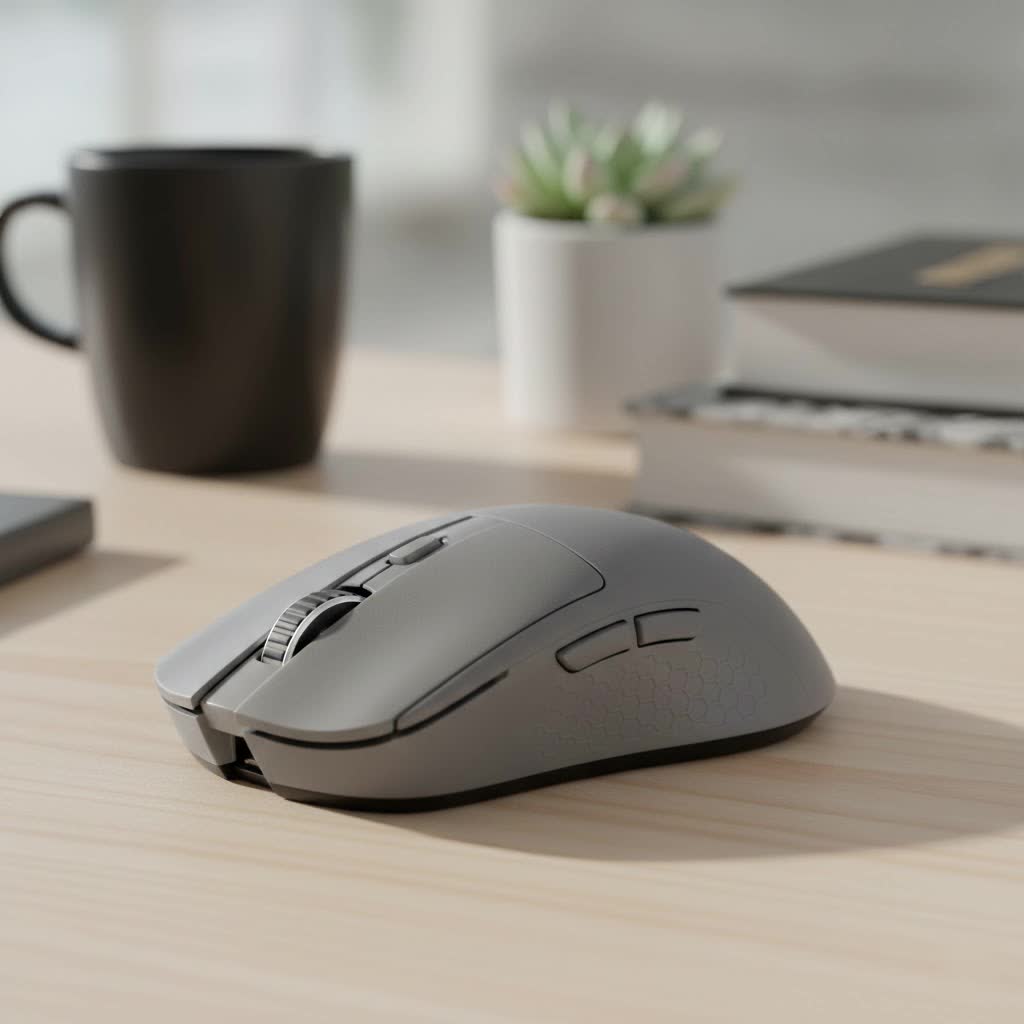
At its core, a lightweight wireless gaming mouse is exactly what it sounds like: a high-performance mouse designed for gaming, free from a connecting cable, and engineered to be as low-mass as possible. While there’s no official standard, the community generally considers “lightweight” to be anything under 80 grams. Many of the most popular models today push this even further, entering the “ultralight” category at under 60 grams.
So, how do manufacturers shed so much weight without sacrificing performance?
- Perforated Shells: The iconic honeycomb design is the most common method. By creating a pattern of holes in the chassis, manufacturers can remove a significant amount of material, reducing overall weight while maintaining structural integrity.
- Advanced Materials: Instead of standard plastics, companies are using thinner, stronger polymers and even carbon fiber composites in some premium models to cut down on grams.
- Internal Component Miniaturization: Everything from the circuit board to the battery is optimized for size and weight. Smaller, more efficient batteries provide hours of gameplay without adding unnecessary bulk.
The Competitive Edge: Why Lighter and Wireless is Better
Switching to a lightweight wireless gaming mouse isn’t just about comfort; it’s about tangible performance gains. The benefits directly translate to better aim, quicker reactions, and enhanced endurance during long gaming sessions.
Unparalleled Agility and Faster Reactions
|
Our Picks for the Best Gaming Mouse in 2026
As an Amazon Associate I earn from qualifying purchases.
|
||
| Num | Product | Action |
|---|---|---|
| 1 | Logitech G502 X Plus Wireless Gaming Mouse - LIGHTSPEED Optical, LIGHTFORCE Switches, LIGHTSYNC RGB, HERO 25K Sensor for PC/Mac - Black |

|
| 2 | Razer Basilisk V3 X HyperSpeed Customizable Wireless Gaming Mouse: Mechanical Switches Gen-2-5G Advanced 18K Optical Sensor - Chroma RGB 9 Programmable Controls 535 Hr Battery Classic Black |
|
| 3 | Logitech G703 Lightspeed Wireless Gaming Mouse W/Hero 25K Sensor, PowerPlay Compatible, Lightsync RGB, Lightweight 95G+10G Optional, 100-25, 600 DPI, Rubber Side Grips - Black |
|
| 4 | Razer Viper V3 HyperSpeed Wireless Esports Gaming Mouse: 82g Lightweight - Up to 280 Hr Battery - 30K DPI Optical Sensor - Gen-2 Mechanical Switches - 8 Programmable Controls - Classic Black |
|
| 5 | Razer Basilisk V3 Customizable Ergonomic Gaming Mouse: Fastest Gaming Mouse Switch - Chroma RGB Lighting - 26K DPI Optical Sensor - 11 Programmable Buttons - HyperScroll Tilt Wheel - Classic Black |
|
| 6 | Logitech G PRO X SUPERLIGHT Wireless Gaming Mouse, Ultra-Lightweight, HERO 25K Sensor, 25,600 DPI, 5 Programmable Buttons, Long Battery Life, Compatible with PC / Mac - Black |
|
| 7 | Logitech G502 Lightspeed Wireless Gaming Mouse with Hero 25K Sensor, PowerPlay Compatible, Tunable Weights and Lightsync RGB - Black |
|
| 8 | Razer DeathAdder Essential Gaming Mouse: 6400 DPI Optical Sensor - 5 Programmable Buttons - Mechanical Switches - Rubber Side Grips - Classic Black |
|
| 9 | Razer Viper V3 Pro Wireless Esports Gaming Mouse: Symmetrical - 54g Lightweight - 8K Polling - 35K DPI Optical Sensor - Gen3 Optical Switches - 8 Programmable Buttons - 95 Hr Battery - Black |
|
| 10 | Razer Naga V2 HyperSpeed Wireless MMO Gaming Mouse: 19 Programmable Buttons - HyperScroll Technology - Focus Pro 30K Optical Sensor - Mechanical Mouse Switches Gen-2 - Up to 400 Hr Battery Life |
|
The primary advantage is the reduction in inertia. A lighter mouse requires less force to start moving and less force to stop. This simple principle of physics has a massive impact on your gameplay. Tracking fast-moving targets in an FPS like Valorant or Apex Legends becomes smoother and more intuitive. Executing a rapid 180-degree “flick shot” feels instantaneous and precise, as you’re not fighting the mouse’s own weight.
Freedom from Cable Drag
The “wireless” part of the equation is just as crucial. Every gamer has experienced the frustration of a mouse cable snagging on the edge of their desk or getting caught under the keyboard. This “cable drag” creates inconsistent resistance, subtly throwing off your aim at critical moments. A wireless mouse eliminates this variable entirely, providing a perfectly consistent and unrestricted glide across your mousepad.
Reduced Fatigue for Longer Sessions
Gaming is a marathon, not a sprint. Over hours of play, the cumulative effort of moving a heavier mouse adds up, leading to wrist and arm fatigue. A lightweight mouse reduces this strain significantly. You can play longer and maintain a higher level of performance without feeling the physical toll, which is a massive advantage in tournaments or extended ranked grinds. As our lead hardware analyst at Cyexx, Alex Carter, often states, “Think of it like the difference between running in boots versus running in track spikes. Reducing the weight at the end of your limb frees up an incredible amount of agility and reduces fatigue over time.”
Choosing Your Weapon: Key Features to Scrutinize
Not all lightweight wireless mice are created equal. When you’re ready to make the investment, here are the critical features you need to analyze to find the perfect fit for your playstyle.
Weight and Balance
The headline feature is weight, but balance is its silent partner. A well-designed mouse will have its center of gravity positioned so it doesn’t feel front- or back-heavy, ensuring stable and predictable movements. Consider what weight class you’re aiming for. A drop from 100g to 75g is noticeable, but the jump to a sub-60g mouse can feel revolutionary.
Sensor and Performance
The heart of any gaming mouse is its sensor. Look for top-tier optical sensors, like the PixArt 3395 or Logitech’s HERO sensor. These provide flawless 1:1 tracking with no acceleration, prediction, or jitter. Key terms to know are:
- DPI (Dots Per Inch): This is the sensitivity of the mouse. While manufacturers boast massive numbers (20,000+ DPI), most pro gamers play in the 400-1600 DPI range. More important than the max DPI is the sensor’s ability to perform flawlessly at your preferred setting.
- IPS (Inches Per Second): This measures the maximum speed the mouse can be moved at before it stops tracking accurately. A high IPS (400+) ensures that even the fastest flicks are registered perfectly.
Wireless Connectivity and Latency
The old fear of “wireless lag” is a thing of the past. Modern wireless gaming mice use proprietary 2.4GHz connections that are, for all intents and purposes, as fast and reliable as a wired connection. Technologies like Razer HyperSpeed and Logitech Lightspeed deliver polling rates of 1000Hz (1ms response time), with some newer models even pushing 4000Hz or 8000Hz. You get the freedom of wireless with the performance of wired.
Battery Life
This is the main trade-off for the wireless experience. Manufacturers have to balance battery size (and its associated weight) with longevity. Most modern lightweight wireless mice offer anywhere from 40 to 100 hours of continuous use on a single charge. Look for mice with USB-C charging for convenience and check reviews for real-world battery performance, as manufacturer claims can sometimes be optimistic.
Shape, Size, and Grip Style
This is perhaps the most personal and crucial factor. A mouse’s shape determines how it fits in your hand. The three main grip styles are:
- Palm Grip: Your entire hand rests on the mouse. This is best suited for larger, ergonomic mice.
- Claw Grip: Your palm rests on the back, but your fingers are arched up in a claw-like shape. This works well with ambidextrous or smaller ergonomic mice.
- Fingertip Grip: Only your fingertips touch the mouse, with your palm floating. This style benefits the most from ultralight, small mice.
Make sure to choose a mouse shape that complements your hand size and natural grip style for maximum comfort and control.
Potential Downsides to Consider
While the benefits are immense, it’s important to be aware of the potential trade-offs. The focus on weight reduction can sometimes mean fewer features. You might find fewer programmable buttons, less RGB lighting, and a higher price tag compared to heavier, wired counterparts. Furthermore, some users initially perceive ultralight, perforated mice as feeling less “premium” or durable, though top brands use advanced engineering to ensure their structural integrity holds up to intense gaming.
Frequently Asked Questions (FAQ)
What is the ideal weight for a gaming mouse?
There is no single “best” weight, as it’s highly preferential. However, most competitive FPS players today are trending towards mice in the 50-70 gram range. It offers a great balance of speed and stability.
Is a lightweight wireless gaming mouse really as fast as a wired one?
Yes. Modern 2.4GHz wireless technology from major brands has a 1ms (1000Hz) response time, which is identical to standard wired gaming mice. The difference in latency is humanly imperceptible.
Are honeycomb mice difficult to keep clean?
They are more exposed to dust and debris than solid-shell mice. However, a can of compressed air is usually all that’s needed to clean them out effectively every few weeks. It’s a small maintenance task for the benefit of lower weight.
How long does the battery typically last on a single charge?
This varies widely by model and usage (e.g., RGB lighting on or off). You can generally expect between 40 and 100 hours of active use. Most mice can be fully charged in just an hour or two.
Is a lightweight mouse only good for FPS games?
While the benefits are most pronounced in fast-paced shooters, a lightweight mouse is excellent for any genre. The reduced fatigue is a universal benefit, and the agility is helpful in MOBA and RTS games for rapid map navigation and cursor precision.
The Final Verdict
The transition to a lightweight wireless gaming mouse is one of the most impactful hardware upgrades a serious gamer can make. It’s not just a feature—it’s a performance philosophy. By removing the physical tether of a cable and stripping away unnecessary mass, you unlock a new level of speed, precision, and comfort. Your mouse ceases to be a tool you’re moving and instead becomes a natural extension of your hand. If you’re ready to feel the difference and unlock your true aiming potential, it’s time to cut the cord and go light.
